 EN
EN
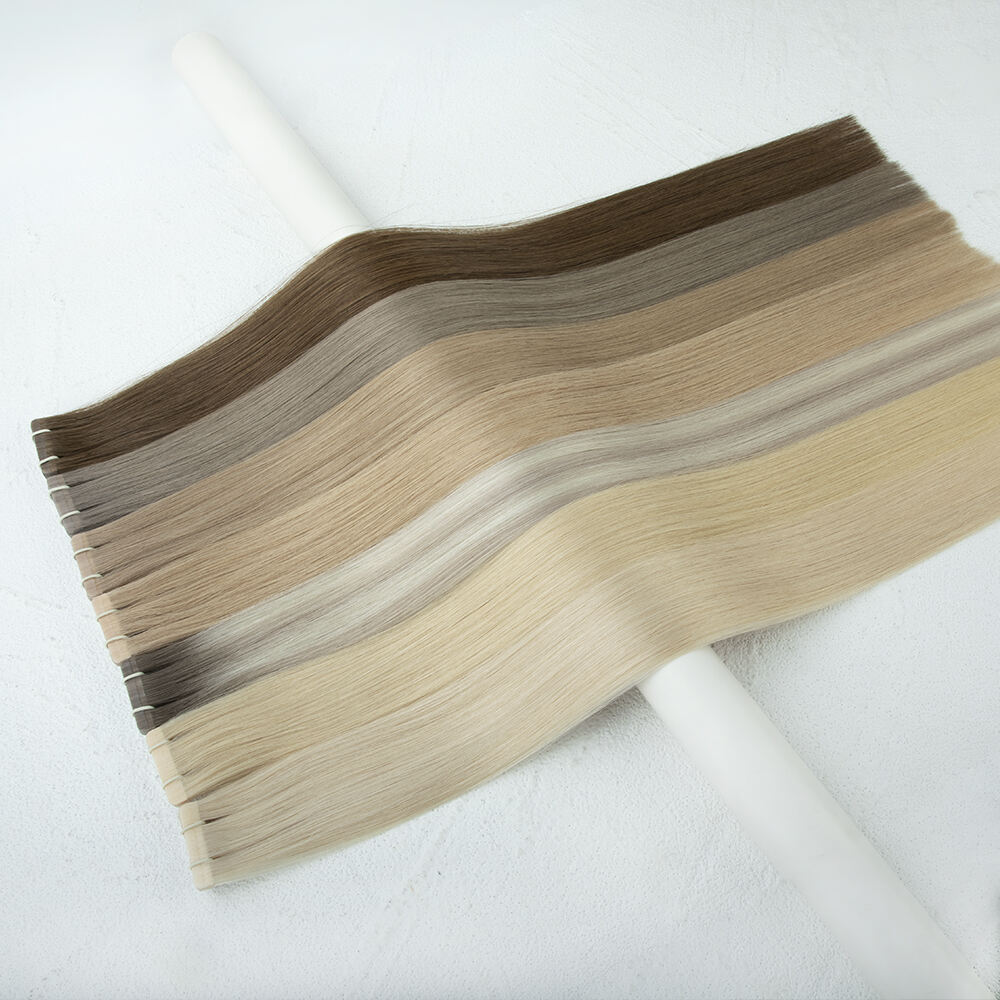
When it comes to adding length, volume, or dimension to natural hair, the method of attachment matters just as much as the quality of the hair itself. tape hair extensions have steadily risen to become one of the most preferred professional solutions in the hair industry, and for good reason. Unlike older attachment systems that rely on heat bonds, braiding, or bulky weft tracks sewn into the hair, tape hair extensions offer a fundamentally different approach — one that prioritizes comfort, discretion, and long-term hair health without sacrificing styling versatility.
Traditional weft extensions have served the industry for decades, and they remain a viable option in certain contexts. However, as client expectations evolve and salon professionals demand more refined results, the limitations of traditional wefts become increasingly apparent. Understanding the specific advantages of tape hair extensions over traditional wefts helps stylists, salon owners, and end consumers make more informed decisions — decisions that affect not only the final look but also the health of the natural hair, the efficiency of the application process, and the overall client experience.
The Structural Difference That Changes Everything
How Tape Hair Extensions Are Constructed
Tape hair extensions consist of thin, pre-taped panels of human hair that are sandwiched around small sections of natural hair using a medical-grade adhesive strip. Each panel is typically about 1.5 inches wide and lies completely flat against the scalp, creating a seamless integration with the natural hair. The adhesive used in professional-grade tape hair extensions is designed to be gentle on the hair shaft while maintaining a secure hold for four to eight weeks before reapplication is needed.
The construction of tape hair extensions is engineered for invisibility. Because the tape bond is thin and flat, it sits flush against the head rather than creating a raised ridge or bump. This structural characteristic is one of the primary reasons stylists favor tape hair extensions for clients who wear their hair in updos, ponytails, or other styles that expose the attachment points. The result is a natural-looking finish that is difficult to detect even under close inspection.
High-quality tape hair extensions, particularly those made from Remy human hair with double-drawn construction, ensure that the hair strands are aligned in the same direction from root to tip. This alignment prevents tangling, maintains a smooth texture, and allows the extension hair to blend seamlessly with the client's natural hair. The double-drawn specification means the hair is fuller from top to bottom, eliminating the tapered, thin-ended appearance that can make extensions look unnatural.
How Traditional Wefts Are Constructed and Applied
Traditional weft extensions come in long strips of hair that are either machine-sewn or hand-tied along a horizontal track. These wefts are typically applied by braiding the natural hair into cornrows and then sewing the weft tracks onto the braids using a needle and thread. Alternatively, clip-in wefts use pressure clips to attach the track to the natural hair, and glue-in wefts use hot or cold adhesive to bond the track directly to the hair.
The bulk of a traditional weft track is one of its most significant drawbacks. Even when applied by an experienced stylist, weft tracks create a noticeable ridge along the scalp that can be felt and sometimes seen through the natural hair. For clients with fine or thin hair, this bulk is especially problematic because there is not enough natural hair to conceal the tracks effectively. The result can look and feel heavy, and the tension placed on the natural hair by the braided base can lead to traction alopecia over time.
Traditional wefts also require a significant amount of natural hair to create the braided foundation, which means they are not suitable for clients with very fine, short, or fragile hair. The application process is time-consuming, often taking three to five hours in a salon setting, and the removal process can be equally demanding. These structural and application differences set the stage for understanding why tape hair extensions offer a more practical and client-friendly alternative.
Application Efficiency and Salon Productivity
Speed of Application With Tape Hair Extensions
One of the most immediately practical advantages of tape hair extensions over traditional wefts is the speed of application. A full head of tape hair extensions can typically be applied in forty-five minutes to ninety minutes, depending on the number of panels used and the stylist's experience level. This efficiency is a significant business advantage for salon professionals who need to manage appointment schedules and maximize revenue per working hour.
The application process for tape hair extensions requires no special braiding skills, no needle and thread, and no heat tools beyond a flat iron used to press the tape bonds together. The stylist simply sections the natural hair, slides the tape panel beneath a thin section, places a second panel on top, and presses the two adhesive sides together to sandwich the natural hair. This straightforward technique means that stylists can be trained relatively quickly, and the risk of application errors is lower compared to more complex methods.
For salon owners, the faster application time of tape hair extensions translates directly into the ability to serve more clients per day. When compared to the three-to-five-hour commitment required for a traditional sew-in weft installation, the time savings are substantial. This efficiency does not come at the cost of quality — properly applied tape hair extensions deliver a polished, professional result that clients are consistently satisfied with.
Reapplication and Maintenance Cycles
Tape hair extensions are designed to be reusable, which adds another layer of practical and economic advantage. After four to eight weeks of wear, the extensions are removed using a professional bond remover solution that dissolves the adhesive without damaging the natural hair. The extension panels are then cleaned, re-taped with fresh adhesive strips, and reapplied. High-quality tape hair extensions made from Remy human hair can typically be reused two to three times before the hair quality begins to diminish.
This reusability makes tape hair extensions a cost-effective choice for clients who want to maintain their extensions long-term. The ongoing maintenance appointments are also shorter than the initial application, typically taking thirty to sixty minutes, which keeps the client's time commitment manageable. Traditional weft installations, by contrast, often require complete removal and reinstallation rather than simple repositioning, making the maintenance cycle more labor-intensive and expensive.
The maintenance schedule for tape hair extensions also allows the stylist to monitor the health of the natural hair at regular intervals. Because the extensions are removed and reapplied every four to eight weeks, any signs of damage, breakage, or scalp issues can be identified and addressed promptly. This built-in check-in cycle is a meaningful advantage for clients who are concerned about maintaining the integrity of their natural hair throughout the extension-wearing period.
Comfort, Wearability, and Natural Hair Health
Weight Distribution and Scalp Comfort
Tape hair extensions distribute weight more evenly across the scalp than traditional weft tracks. Because each tape panel is small and lightweight, the tension on any individual section of natural hair is minimal. This even distribution reduces the risk of stress-related hair loss, which is a documented concern with sew-in weft methods that concentrate tension along the braided tracks. Clients who have previously experienced discomfort or headaches from traditional wefts often report a significantly more comfortable experience with tape hair extensions.
The flat profile of tape hair extensions also means there are no raised ridges pressing against the scalp during sleep or physical activity. Clients can sleep comfortably, exercise, and engage in daily activities without the awareness of bulk or pressure that often accompanies traditional weft installations. This wearability factor is frequently cited by clients as one of the primary reasons they prefer tape hair extensions over other methods.
For clients with sensitive scalps or those who have experienced irritation from other extension methods, the medical-grade adhesive used in professional tape hair extensions is generally well-tolerated. The adhesive is applied to the hair shaft rather than directly to the scalp, which further reduces the potential for irritation. Stylists should always conduct a patch test for clients with known sensitivities, but the overall comfort profile of tape hair extensions is favorable compared to methods that involve direct scalp contact with adhesives or tight braiding.
Impact on Natural Hair Integrity
Preserving the health of the natural hair is a priority for both clients and responsible stylists. Tape hair extensions, when applied and removed correctly, have a minimal impact on the natural hair. The adhesive bonds do not require heat application directly to the hair shaft, and the removal process using bond remover solution is gentle enough to avoid mechanical damage when performed by a trained professional.
Traditional weft methods carry a higher risk of natural hair damage for several reasons. The tight braiding required for sew-in installations places sustained tension on the hair follicles, which can weaken the follicle over time and lead to thinning along the hairline and nape. Hot glue methods used for some weft applications can cause heat damage to the natural hair, and the removal of glued wefts often results in breakage if not done carefully.
Tape hair extensions avoid these specific risks by using a low-tension, adhesive-based attachment that does not require braiding or heat bonding. The key to maintaining natural hair health with tape hair extensions lies in proper application technique, appropriate panel sizing relative to the natural hair density, and adherence to the recommended maintenance schedule. When these conditions are met, clients can wear tape hair extensions for extended periods without compromising the health or growth of their natural hair.
Aesthetic Versatility and Styling Freedom
Seamless Blending and Natural Appearance
The aesthetic outcome of tape hair extensions is one of their most compelling advantages. The thin, flat tape bonds lie invisibly beneath the natural hair, allowing the extension hair to blend seamlessly with the client's own hair. This seamless integration is particularly valuable for clients who want to add volume or length without any visible evidence of extensions, even when the hair is worn in styles that expose the roots or scalp.
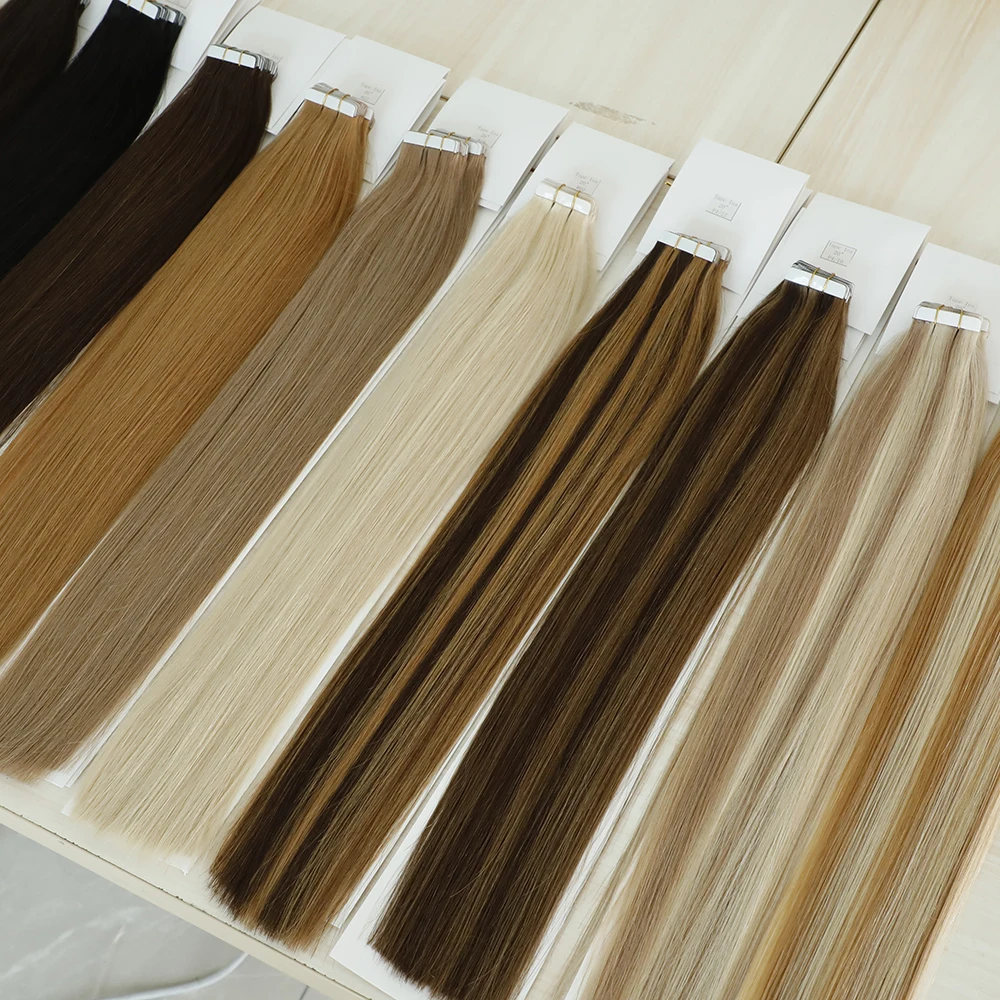
Tape hair extensions are available in a wide range of colors, including ombre and balayage options that mimic the dimensional color effects achieved through professional coloring techniques. This color variety allows stylists to match the extensions precisely to the client's natural hair color or to create intentional contrast for a highlighted effect. The ability to achieve dimensional color through tape hair extensions without chemical processing is a significant advantage for clients who want to protect their natural hair from color damage.
The double-drawn construction of premium tape hair extensions ensures that the hair is consistently full from root to tip, which contributes to a more natural and voluminous appearance. Clients who have used lower-quality extensions with single-drawn hair often notice that the ends look thin and wispy, which can make the extensions appear artificial. Double-drawn tape hair extensions eliminate this issue by maintaining consistent density throughout the length of the hair.
Styling Compatibility and Heat Tolerance
Tape hair extensions made from 100% Remy human hair can be styled using the same heat tools and techniques applied to natural hair. Clients can blow-dry, curl, straighten, and style their tape hair extensions without restriction, provided they use appropriate heat protectant products and avoid applying direct heat to the tape bonds themselves. This styling freedom is a significant advantage over synthetic extension options, which cannot tolerate heat styling.
The versatility of tape hair extensions extends to color treatments as well. While it is generally recommended to color the extensions before application rather than after, professional stylists can perform toning and glossing treatments on tape hair extensions to maintain color consistency as the client's natural hair grows and changes. This flexibility makes tape hair extensions a practical long-term solution rather than a temporary fix.
Traditional weft extensions, while also available in human hair options, often present more styling limitations due to the bulk of the weft track. Updos and high ponytails can reveal the weft tracks, limiting the client's styling options. Tape hair extensions, with their flat and discreet attachment points, allow clients to wear virtually any hairstyle without concern about visible extension hardware. This unrestricted styling freedom is a meaningful quality-of-life advantage that clients consistently value.
Economic Considerations for Salons and Clients
Cost Efficiency Over Time
The initial investment in tape hair extensions may be comparable to or slightly higher than traditional weft options, depending on the quality of the hair and the number of panels required. However, the long-term cost efficiency of tape hair extensions becomes apparent when the full lifecycle of the product is considered. Because high-quality tape hair extensions can be reused multiple times, the cost per wear decreases significantly over the course of several maintenance cycles.
For salon professionals, the faster application time of tape hair extensions means that the service can be priced competitively while still generating strong revenue per hour. The shorter maintenance appointments also make it easier for clients to stay on schedule, which supports consistent recurring revenue for the salon. Traditional weft installations, with their longer application times and more complex maintenance requirements, can be harder to schedule efficiently and may deter clients who have limited time availability.
Clients who invest in premium tape hair extensions made from Remy human hair also benefit from the superior longevity of the hair itself. High-quality human hair maintains its texture, shine, and manageability through multiple reapplication cycles, whereas lower-quality hair may become dry, tangled, or dull after the first use. The upfront investment in quality tape hair extensions pays dividends in the form of a consistently beautiful result over an extended period.
Inventory and Business Scalability for Salons
For salon owners and extension specialists who purchase tape hair extensions at wholesale, the product format offers practical inventory advantages. Tape hair extensions are packaged in standardized panel counts and can be stored efficiently without the bulk associated with long weft tracks. The consistent sizing of tape panels also makes it easier to estimate product requirements for each client, reducing waste and improving inventory management.
The growing consumer demand for tape hair extensions has also created a favorable market environment for salons that specialize in this method. As awareness of the advantages of tape hair extensions spreads among consumers, salons that offer this service as a core competency are well-positioned to attract and retain a loyal client base. Building expertise in tape hair extensions is a strategic investment for salon professionals who want to differentiate their services in a competitive market.
Wholesale purchasing of tape hair extensions allows salons to offer clients a broader range of color and length options without the overhead of maintaining large quantities of each variation. The modular nature of tape hair extensions — where individual panels can be mixed and matched to achieve the desired result — gives stylists creative flexibility while keeping inventory requirements manageable. This scalability makes tape hair extensions a practical choice for salons at every stage of growth.
FAQ
How long do tape hair extensions typically last before they need to be reapplied?
Tape hair extensions generally need to be repositioned every four to eight weeks, depending on how quickly the client's natural hair grows and how well the extensions are maintained. The extension hair itself, if made from high-quality Remy human hair, can typically be reused two to three times with fresh tape before replacement is needed. Regular maintenance appointments help ensure the extensions remain secure and the natural hair stays healthy throughout the wearing period.
Can tape hair extensions be used on fine or thin natural hair?
Yes, tape hair extensions are actually one of the most suitable methods for clients with fine or thin natural hair. Because the tape panels are lightweight and distribute tension evenly, they place less stress on delicate hair than braided weft methods. The key is to use appropriately sized panels and to avoid overloading any single section of natural hair. A skilled stylist will assess the client's hair density before application and adjust the panel placement accordingly to achieve a natural result without compromising hair health.
Are tape hair extensions safe to use with heat styling tools?
Tape hair extensions made from 100% Remy human hair are fully compatible with heat styling tools, including flat irons, curling wands, and blow dryers. The important precaution is to avoid applying direct heat to the tape bonds themselves, as excessive heat can weaken the adhesive and cause the extensions to slip. Using a heat protectant spray and keeping heat tools at a moderate temperature will protect both the extension hair and the tape bonds, ensuring the extensions remain secure and the hair stays in good condition.
How do tape hair extensions compare to traditional wefts in terms of removal?
The removal process for tape hair extensions is generally faster and gentler than the removal of traditional sew-in wefts. A professional bond remover solution is applied to the tape bonds, which dissolves the adhesive and allows the panels to slide out without pulling or breaking the natural hair. The entire removal process typically takes thirty to forty-five minutes. Traditional sew-in wefts require the thread to be carefully cut and the braids to be unraveled, which is more time-consuming and carries a higher risk of mechanical damage to the natural hair if not done carefully.