 EN
EN

Tape-in hair extensions sit directly against the scalp, making any mismatch in length or color immediately obvious. Unlike clip-in extensions—which can be repositioned—tape-ins are bonded close to the roots for up to six weeks. If the extension length differs by more than a few inches from your natural hair, it creates an abrupt “step” instead of a smooth transition. Similarly, a color mismatch—even a half-shade off—stands out under natural light and breaks the illusion of natural volume. Because tape-ins rely on a flat, layering technique, the visual seam must be invisible. Precise length ensures even weight distribution, reducing tension on natural hair; precise color matching guarantees consistent undertones and light reflection across strands, rendering extensions undetectable. Without this attention to detail, the investment risks a stiff, unnatural appearance—and potentially costly corrective work.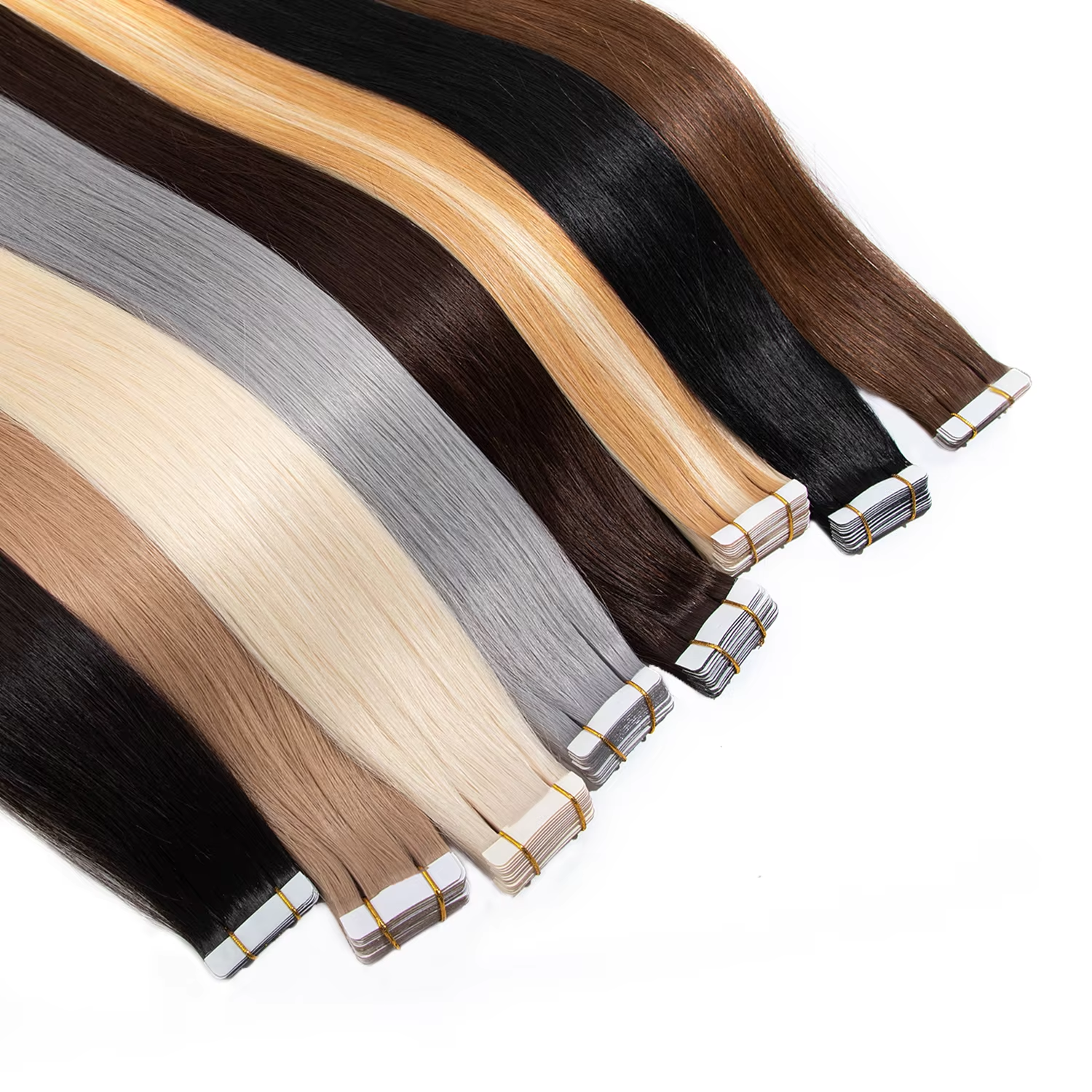
Selecting the proper tape-in extension length is critical to achieving a seamless, comfortable, and flattering result. Contrary to popular belief, dramatic length additions often create a rigid “wall of hair” rather than enhancing volume. Mastering length selection transforms the experience—prioritizing harmony over height for a finish that looks effortlessly natural.
Human hair grows in staggered layers and varying stages, producing subtle, organic transitions between strands. Experts—including certified trichologists and extension specialists—recommend selecting tape-in extensions that extend natural hair by just 2–4 inches (5–10 cm) to mirror this biological rhythm. Rather than jumping from shoulder-length to waist-length, adding 18-inch extensions to mid-back hair gently enhances flow without creating jarring visual breaks. For best results, consult a certified stylist who can assess your hair’s texture, density, and growth phase to recommend the most harmonious length increase.
Extensions significantly longer than your natural hair force flat, low-profile tape bonds to support heavy, unbalanced weight—leading to root lift, visible bulk, and uneven tension at the scalp. When lengths diverge too sharply, the wefts flare outward like “awkward wings,” drawing attention to the bond line and casting shadows that highlight, rather than conceal, the installation. Clinical observations from extension-focused salons show:
Unlike clip- or sew-in methods, tape-ins require uniform length across all wefts to distribute weight evenly. Strategic, modest length additions preserve both hair health and aesthetic integrity—working with, not against, your natural growth pattern.
A flawless blend starts with precise color matching—not just shade number, but undertone alignment and placement strategy. Many clients focus solely on numeric labels, only to discover later that mismatched undertones create flat, artificial contrast—even when the “shade” appears identical on the swatch.
Shade numbers vary widely across brands and lack universal standardization. Instead, professional colorists and extension educators emphasize identifying your natural hair’s undertone—cool (ash), warm (golden), or neutral—in natural daylight. Extensions matching your undertone will reflect light consistently with your own hair, ensuring seamless integration even if the numeric shade differs slightly. To determine your base, hold a clean strand against a white background: ash tones reveal faint blue or gray, warm tones show red or gold, and neutral bases balance both. This simple, evidence-backed step prevents the dull, synthetic appearance common with number-only matching.
A frequent misstep is matching extensions to the roots, which are typically darker, less porous, and less exposed to light and product buildup. The 2023 consensus among board-certified dermatologists and master colorists recommends matching tape-in extensions to the mid-lengths and ends of natural hair—the zone where extensions will actually sit and be viewed. Since tape-ins begin just below the root and extend downward, aligning with the lighter, more reflective mid-shaft and ends ensures consistent luminosity and tone under real-world lighting. For enhanced realism, consider layering two complementary shades—such as a base tone with a subtle highlight—to replicate natural dimension, eliminate harsh demarcation lines, and support long-term wearability.
Why is precise length essential for tape-in extensions?
Precise length ensures a smooth, natural-looking transition between your natural hair and the extensions. It also distributes weight evenly, reducing scalp tension and the risk of follicle damage.
How do I determine the ideal length for tape-ins?
Experts recommend extending natural hair by 2–4 inches for a harmonious blend. Consult a certified stylist to evaluate your hair’s texture, density, and growth pattern for personalized advice.
What makes color matching critical for tape-in extensions?
Matching extensions to your hair’s undertone and mid-lengths/ends ensures consistent light reflection and a natural appearance, preventing harsh contrasts and dull finishes.
Should extensions match my roots or the ends of my hair?
Tape-ins should align with the mid-lengths and ends, as these regions are lighter and more visible under natural lighting.
Can dramatic length additions harm my natural hair?
Yes, adding significantly longer extensions can cause uneven tension and stress on hair follicles, leading to root lift and potential damage over time.