 EN
EN

Creating a flawless hair transformation requires understanding how human hair wefts integrate with your natural hair texture and growth patterns. Professional stylists and hair enthusiasts alike recognize that achieving seamless blending depends on multiple factors including proper installation techniques, quality selection, and ongoing maintenance protocols. The art of invisible hair extension application has evolved significantly with advanced manufacturing processes and innovative attachment methods that prioritize both aesthetics and hair health.
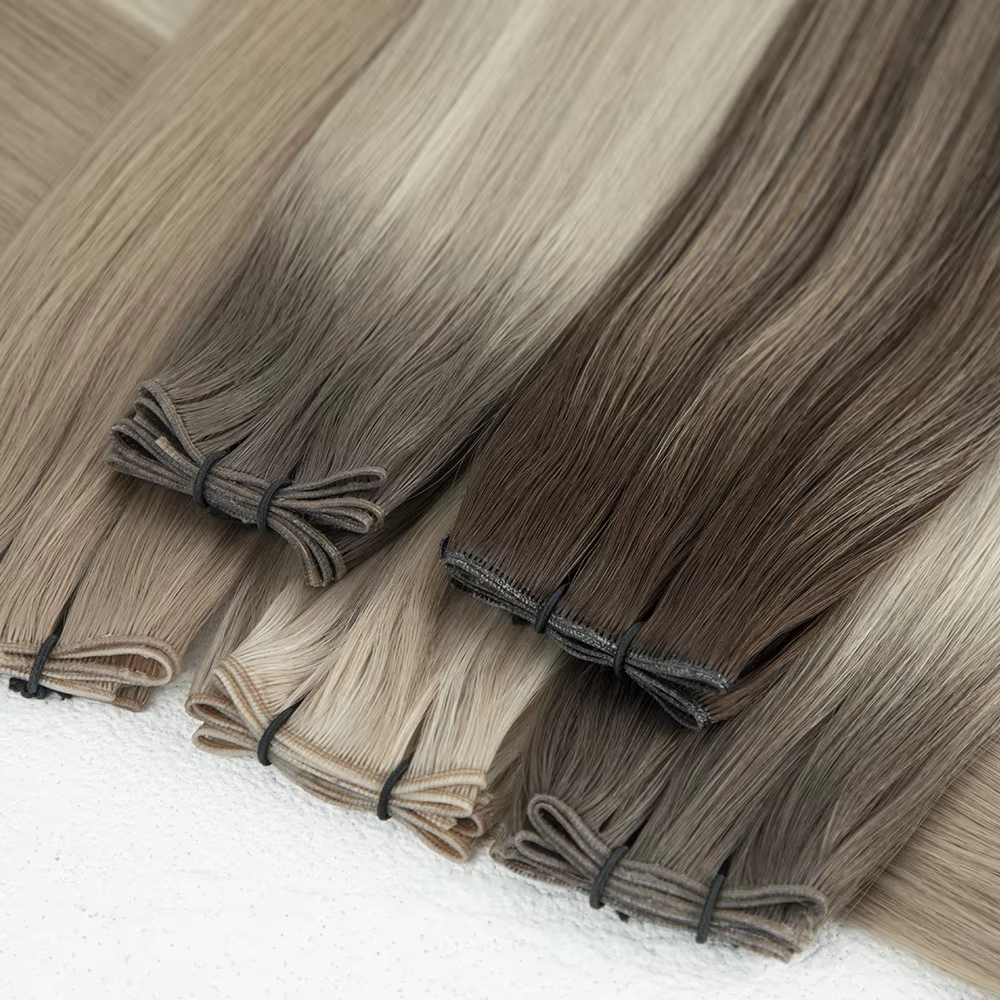
Modern human hair wefts utilize sophisticated base construction that mimics natural scalp appearance while providing secure attachment points. Hand-tied weft systems feature ultra-thin bases created through meticulous knotting techniques that eliminate bulk at the attachment site. Machine-sewn alternatives offer durability advantages through reinforced stitching patterns that distribute tension evenly across the weft length. The choice between construction methods directly impacts how effectively the extensions integrate with existing hair density and movement patterns.
Advanced manufacturers employ specialized machinery that creates consistent tension throughout the weft base, preventing premature loosening or uneven distribution. Quality control measures ensure each strand maintains proper alignment within the weft structure, eliminating tangles and maintaining natural fall patterns. Professional-grade wefts undergo extensive testing to verify colorfastness, texture retention, and structural integrity under various styling conditions.
Proper cuticle direction alignment represents a critical factor in achieving seamless integration between extensions and natural hair. Remy human hair maintains intact cuticle layers that lie in the same direction as growth, preventing tangling and ensuring smooth blending during styling processes. Non-Remy alternatives often require additional processing to achieve acceptable texture compatibility, though results may vary significantly between manufacturers and processing methods.
Texture analysis involves examining hair diameter, natural wave patterns, and porosity levels to identify compatible extension options. Fine hair textures require lightweight weft construction to prevent visible demarcation lines, while coarser hair types can accommodate fuller weft densities without detection. Professional color matching extends beyond surface appearance to include undertone analysis and light reflection properties that affect overall blend quality.
Successful weft installation requires comprehensive understanding of natural hair growth patterns and sectioning strategies that maximize concealment. Horizontal placement techniques involve creating precise parting lines that follow the natural curve of the head, ensuring wefts lay flat against the scalp without creating visible ridges. Vertical sectioning allows for targeted volume enhancement in specific areas while maintaining overall hair movement and styling versatility.
Professional stylists employ layering techniques that distribute weft placement across multiple levels, creating dimensional fullness that appears completely natural. Strategic spacing between wefts prevents overcrowding that could compromise hair health or create uncomfortable tension. Proper installation timing allows for gradual adaptation periods where natural hair adjusts to the additional weight and volume without stress or damage.
Modern attachment methods prioritize both security and comfort through innovative hardware and application techniques. Micro-ring systems utilize small metal components that clamp securely without requiring heat or adhesive chemicals. Tape-in methods employ medical-grade adhesives that bond gently with natural hair while allowing for safe removal and repositioning when necessary.
Sew-in techniques remain popular for their longevity and versatility, particularly when using human hair wefts designed for professional installation. Thread selection impacts both security and comfort, with silk and cotton blends offering optimal strength without excessive stiffness. Proper tension adjustment prevents headaches or scalp irritation while ensuring wefts remain securely positioned throughout daily activities.
Achieving perfect color integration requires systematic analysis of multiple hair characteristics beyond basic shade matching. Natural hair exhibits varying tones throughout its length due to environmental exposure, previous chemical treatments, and natural growth cycles. Professional colorists examine hair samples under different lighting conditions to identify subtle variations that could affect extension compatibility.
Highlight and lowlight patterns within natural hair create dimensional effects that must be replicated in extension selection for seamless blending. Multi-tonal weft options allow for complex color matching that mirrors natural variation patterns. Custom coloring services enable precise shade adjustment when standard options fail to achieve desired integration levels.
Long-term color maintenance requires coordinated care routines that address both natural hair and extension needs simultaneously. UV protection products prevent fading that could create visible differences between natural and extension hair over time. Professional toning services help maintain color harmony as natural hair grows and changes due to environmental factors or styling practices.
Regular color refresh appointments allow stylists to assess integration quality and make necessary adjustments before problems become visible. Semi-permanent color treatments can address minor discrepancies without compromising hair health or extension integrity. Proper home care protocols preserve color vibrancy and extend the time between professional maintenance appointments.
Human hair wefts respond to heat styling tools similarly to natural hair when proper techniques and protective measures are employed. Temperature control becomes critical when working with extensions, as excessive heat can cause permanent damage to the hair cuticle or weft construction. Professional-grade tools with precise temperature settings allow for effective styling while minimizing thermal stress on both natural and extension hair.
Heat protection products create barrier layers that shield hair from thermal damage while facilitating smooth styling results. Application techniques should ensure even distribution across all hair sections, paying particular attention to weft attachment areas where heat concentration could compromise installation security. Regular deep conditioning treatments help maintain moisture balance and prevent heat-related brittleness.
Establishing consistent care routines preserves extension quality while maintaining natural hair health throughout the wearing period. Gentle brushing techniques using specialized extension brushes prevent tangling while distributing natural oils evenly through all hair sections. Sleeping protection methods such as silk pillowcases or protective styling reduce friction that could cause premature wear or tangling.
Product selection focuses on sulfate-free formulations that cleanse effectively without stripping natural oils or compromising weft adhesion. Leave-in treatments provide ongoing nourishment while protecting against environmental stressors. Regular professional maintenance appointments allow for thorough cleansing and repositioning that extends overall extension lifespan.
When extensions become visible or detectable, systematic evaluation helps identify underlying causes and appropriate solutions. Improper placement often results in weft lines that show through natural hair, particularly in areas with insufficient coverage density. Repositioning techniques can address placement issues without requiring complete reinstallation when caught early.
Color mismatches may become apparent over time as natural hair fades or grows, requiring professional correction through strategic coloring or extension replacement. Texture incompatibilities manifest as obvious differences in movement or styling behavior between natural and extension hair. Professional assessment helps determine whether issues can be corrected through styling adjustments or require hardware replacement.
Discomfort during extension wear often indicates installation problems that require professional attention. Excessive tension from overly tight attachment methods can cause headaches, scalp sensitivity, or hair breakage around weft placement areas. Adjustment procedures can relieve tension while maintaining security when performed by experienced technicians.
Weight distribution issues occur when weft placement creates uneven pressure across the scalp surface. Strategic redistribution of attachment points helps balance weight loads while maintaining desired volume and styling capabilities. Regular comfort assessments during initial wearing periods allow for timely adjustments that prevent more serious problems from developing.
High-quality human hair wefts can maintain excellent condition for six to twelve months with proper installation and care routines. Factors affecting longevity include hair quality, installation method, maintenance frequency, and styling practices. Remy human hair typically offers superior durability compared to processed alternatives, while hand-tied wefts generally last longer than machine-sewn options due to gentler construction methods.
Professional chemical processing is possible with human hair wefts, though results vary based on previous treatment history and current hair condition. Virgin hair accepts color and chemical treatments most effectively, while pre-processed hair may have limited capacity for additional chemical alteration. Always consult with experienced colorists who understand extension-specific techniques and limitations before attempting chemical modifications.
Hand-tied weft installations typically offer the most natural appearance due to their ultra-thin base construction and flexible movement patterns. Sew-in methods provide excellent security and longevity while maintaining natural hair flow when performed by skilled technicians. The optimal choice depends on individual hair characteristics, lifestyle requirements, and desired wearing duration.
Pre-installation preparation includes thorough cleansing with clarifying shampoo to remove product buildup and natural oils that could interfere with attachment security. Deep conditioning treatments one week prior help strengthen hair and improve overall health. Avoid heavy styling products or treatments immediately before installation, and ensure hair is completely dry and free from tangles during the appointment.